
Coaching Concepts 1
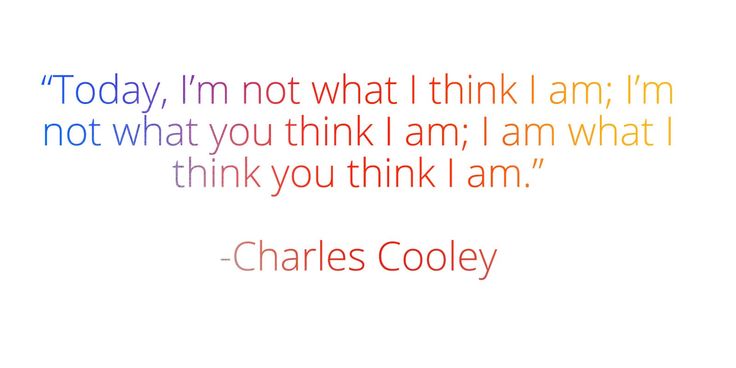
Looking-Glass Self
The “Looking-Glass Self”: Seeing Yourself Through Others’ Eyes
Have you ever caught yourself wondering, “How do they see me?” That question lies at the heart of the sociological concept called the “looking-glass self,” introduced by Charles Horton Cooley over a century ago.
What is the looking-glass self?
It’s the idea that we form our self-identity by imagining how others perceive us. Like looking into a mirror shaped by social interactions, we develop our self-image based on what we think others think of us.
Cooley outlined this process in three steps:
- We imagine how we appear to others.
- We imagine the judgment they make of that appearance.
- We experience feelings (pride, shame, embarrassment) based on that imagined judgment.
“The ‘self’ grows out of social experience… We see ourselves as others see us.” – Charles Horton Cooley
Why This Matters Today
In today’s hyper-connected world, where social media amplifies our audience, the looking-glass self is more relevant than ever. We constantly adjust our behavior and self-presentation based on how we believe others view us—even if those beliefs are imagined.
How Coaching Helps
In coaching, understanding the looking-glass self helps individuals differentiate between perceived judgments and actual feedback. Coaches help clients challenge limiting beliefs born from imagined criticisms and nurture authentic confidence.
For example, if you hesitate to share your ideas fearing judgment, coaching can empower you to open your “internal latch,” fostering courage and genuine self-expression.
Final Thought
The looking-glass self reminds us that while others’ views shape us, the power to define who we are ultimately lies within ourselves.
Ladder of Inference
Rethinking Thinking: Unlocking the Power of a Flexible Mindset
Have you ever noticed how quickly we jump to conclusions or form beliefs based on limited information? This mental shortcut is closely related to the Ladder of Inference, a powerful model that explains how we move from observing raw data to taking action—often without realizing how many assumptions shape our conclusions.
What Is the Ladder of Inference?
The Ladder of Inference was first developed by organizational psychologist Chris Argyris and popularized by Harvard Business School professor Peter Senge in his groundbreaking work on learning organizations. This model illustrates the thinking process that individuals go through, often unconsciously, when interpreting information and making decisions.
The ladder has several steps:
- Observable Data and Experiences
We start by observing raw data or sensory experiences—what we see, hear, or sense. - Selecting Data
From the flood of information, we select specific pieces of data that catch our attention. This selection is influenced by our beliefs, culture, and past experiences. - Adding Meaning
We interpret the selected data, adding personal or cultural meaning to it. - Making Assumptions
Based on the meaning we assign, we make assumptions about the situation or the people involved. - Drawing Conclusions
These assumptions lead us to form conclusions about what is happening. - Adopting Beliefs
Over time, these conclusions reinforce or create new beliefs about the world. - Taking Actions
Finally, based on these beliefs, we take actions or make decisions.
Because each step builds on the previous one, errors or biases early in the process can distort the entire reasoning chain—leading to misunderstandings, conflicts, or poor decisions.
Why the Ladder of Inference Matters
Peter Senge introduced the Ladder of Inference in his book The Fifth Discipline as part of his research at Harvard on how organizations learn and adapt. He emphasized that being aware of this mental process is critical for better communication, conflict resolution, and effective decision-making.
By recognizing when we are climbing the ladder too quickly—or based on faulty assumptions—we can pause, question our thinking, and choose to “step down” the ladder to revisit facts rather than acting on misinterpretations.
Connecting the Ladder of Inference to Rethinking
Rethinking, as discussed in Trevor Maber’s TED-Ed talk “Rethinking Thinking,” is essentially about stepping back from automatic mental leaps up the Ladder of Inference. It encourages us to:
- Examine the raw data before drawing conclusions.
- Question the assumptions and meanings we add.
- Challenge our beliefs and open ourselves to alternative perspectives.
This conscious reflection breaks rigid thinking patterns, allowing our brains to form new neural connections and become more adaptable.
Practical Steps to Navigate the Ladder of Inference
- Pause and Observe: Notice when you are making assumptions or judgments.
- Question Your Data Selection: Are you focusing only on information that supports your existing beliefs?
- Clarify Meanings and Assumptions: Ask yourself why you are interpreting the data in a particular way.
- Seek Alternative Interpretations: Consider other explanations or viewpoints.
- Test Your Conclusions: Look for evidence that might disprove your assumptions.
- Reflect on Beliefs: Are your beliefs flexible or fixed?
- Decide Mindfully: Take actions based on this reflective process.
Why This Matters for Personal Growth and Coaching
Unchecked climbing of the Ladder of Inference can reinforce limiting beliefs, distort reality, and restrict personal growth. At Kreashala.in, we help clients recognize and navigate this ladder to foster clearer thinking, greater self-awareness, and empowered decision-making.
By learning to rethink—pausing to examine each step—we open doors to creativity, emotional resilience, and authentic growth.
Conclusion: Embrace the Power to Rethink
Understanding the Ladder of Inference equips you with a tool to deconstruct your thinking and avoid mental traps. As Trevor Maber highlights, rethinking is not just a cognitive skill but a transformative habit that strengthens your mind’s flexibility and resilience.
At Kreashala.in, we are committed to guiding you in mastering this mindset for lifelong learning and meaningful change. Start your journey toward clearer thinking and personal transformation:
🌐 blog.kreashala.in